


TERRA researchers on the public agenda: experts analyze climate risks and rural fires
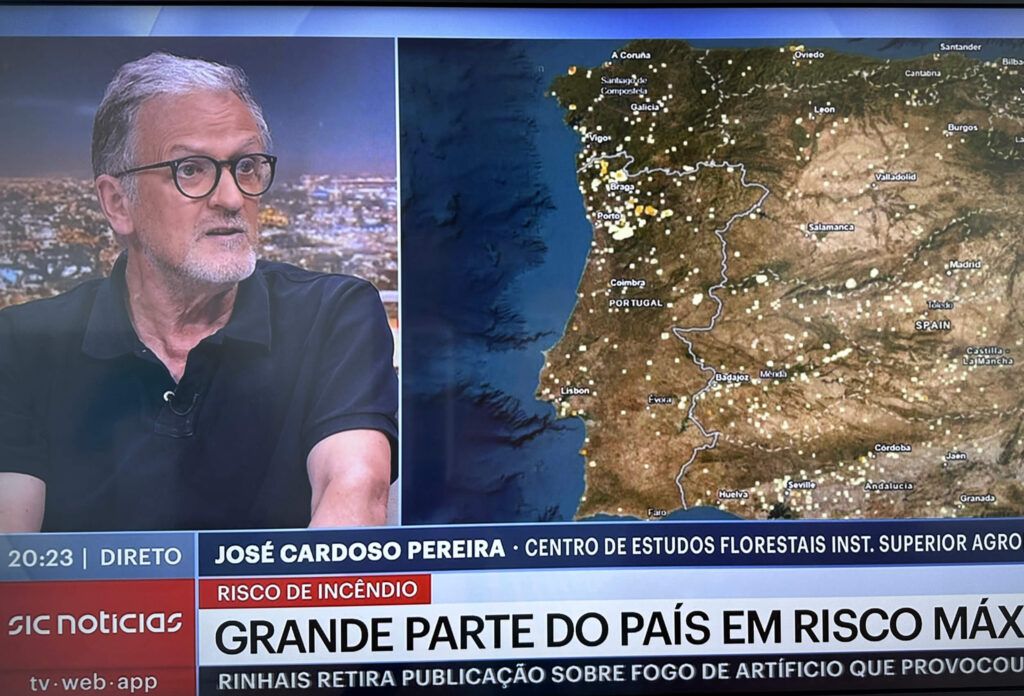
José Miguel Cardoso Pereira (CEF/TERRA) and António Lopes (CEG/TERRA) were featured on national television this week, bringing the growing risks associated with climate change to the public agenda.
This week, two researchers from the TERRA Associate Laboratory appeared on national television, bringing urgent reflections on the impacts of climate change in Portugal to the public agenda — from extreme heat in cities to the vulnerability of the territory to rural fires.
Rural fires: risks and solutions
Professor José Miguel Cardoso Pereira, researcher at the Forest Research Centre (CEF) and the TERRA Associate Laboratory, participated on August 4 and 5, respectively, in the programs Grande Edição on SIC Notícias and 360º on RTP3, where he addressed the structural causes of the most serious fires in the country and the challenges in rural fire management.
During his appearance on SIC Notícias, the researcher explained that “central and northern Portugal have environmental conditions that make them more prone to fire than anywhere else in southern Europe.” According to the forest ecology expert, these regions have an Atlantic climate in winter, with high water availability that favors vegetation growth, and Mediterranean characteristics in summer, which promote the drying of fine vegetation.
Professor José Miguel Cardoso Pereira (CEF/TERRA) also pointed out that, this week alone, nearly 40,000 hectares have burned, and that the weather forecast for the coming days is worrying. “It requires increased precautions and care from the population,” he said, arguing that “fire must be managed and prevented.”
On RTP3’s 360º program, the researcher acknowledged the good planning work done by AGIF – Agência para a Gestão Integrada de Fogos Rurais, I.P. (Agency for Integrated Management of Rural Fires), but lamented the slow pace of its implementation in the field, hampered by bureaucracy. He advocated active fire management, warning of the accumulation of brush due to the abandonment of pastoralism and the near extinction of traditional burning practices.


Cities poorly equipped for extreme heat
António Lopes, researcher at the Centre of Geographical Studies (CEG), participated in RTP3’s 360º program on August 5, where he addressed the growing challenges of heat waves.
The CEG/TERRA researcher drew attention to the discrepancy between actual temperatures in urban centers and the values recorded at weather stations: “city centers are usually warmer than the location/weather station where maximum and minimum temperatures are measured.” He added that “some houses are not prepared,” addressing energy poverty and the way we have built cities—with dark colors, poor ventilation, and a lack of green spaces.
The expert warned of the need for natural solutions and the creation of climate refuges, such as the example of Barcelona, and the importance of monitoring temperatures within cities.
The contributions from António Lopes and José Miguel Cardoso Pereira reveal two sides of the same problem: Portugal is ill-prepared to deal with the increasingly frequent extreme weather events. Whether in cities or rural areas, there is an urgent need to rethink the territory, value scientific knowledge, and invest in sustainable solutions that protect populations and ecosystems.
Partilhe esta notícia:
Share this news: