


Study Published in Nature Reveals Hidden Impact of Human Activities on Nature
An international study involving researchers from the TERRA Associate Laboratory — Ruben Heleno and José Miguel Costa, from the Faculty of Science and Technology of the University of Coimbra (FCTUC) — reveals that many areas of natural vegetation lack species that could be present, especially in regions heavily impacted by human activity. The study, led by the University of Tartu (Estonia), was recently published in the prestigious journal Nature.
The research involved over 200 scientists from the DarkDivNet network, who surveyed plants in nearly 5,500 sites across 119 regions worldwide. The study recorded all plant species present and identified so-called “dark diversity” — native species that could potentially occur in those areas but are currently absent. Through this innovative approach, the researchers were able to estimate the true potential plant diversity of each site and assess the hidden impact of human activities.
The results show that in regions less affected by human presence, more than one-third of potentially suitable species are actually present. However, in heavily impacted areas, that number drops drastically to just one in five suitable species. This negative effect often goes unnoticed in traditional biodiversity assessments, which only count the total number of species currently present.
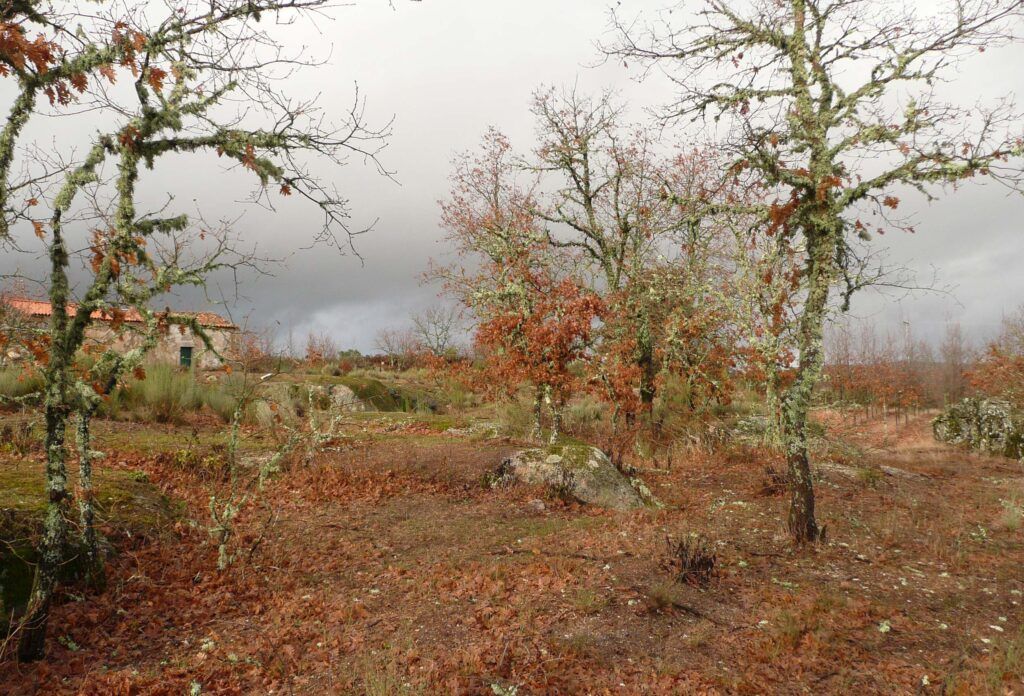
In Portugal, the team from the Centre for Functional Ecology (CFE) at FCTUC studied 34 sites in the central region of the country, ranging from well-preserved forest fragments to abandoned former agricultural fields. The goal was to identify missing species and better understand existing ecological gaps in areas north of Coimbra, where the group has been conducting research for over a decade.
The study also used the Human Footprint Index to evaluate the impact of factors such as population density, urbanization, agriculture, and infrastructure. It concluded that plant diversity is negatively influenced by these factors, even in areas that still offer suitable conditions for native species to thrive.
“This finding is concerning. On the one hand, it shows that the effects of human activities — such as roads, deforestation, and pollution — extend far beyond areas typically considered disturbed. On the other hand, it reveals, for the first time, that plants are struggling to recolonize sites that would otherwise be suitable for them. This is a warning sign about the crucial role of wildlife, particularly seed dispersers, whose ecological services appear to be compromised due to the decline of many animal populations,” warns Ruben Heleno, professor in the Department of Life Sciences and researcher at CFE/TERRA.
The study highlights the importance of preserving and restoring healthy ecosystems — including both flora and fauna — even outside protected areas. Moreover, the concept of dark diversity emerges as a practical tool for identifying missing species and monitoring progress in the recovery of degraded ecosystems.
The scientific article, titled “Global dark diversity study reveals hidden impact of human activities on nature”, is available in Nature here.
Partilhe esta notícia:
Share this news: