


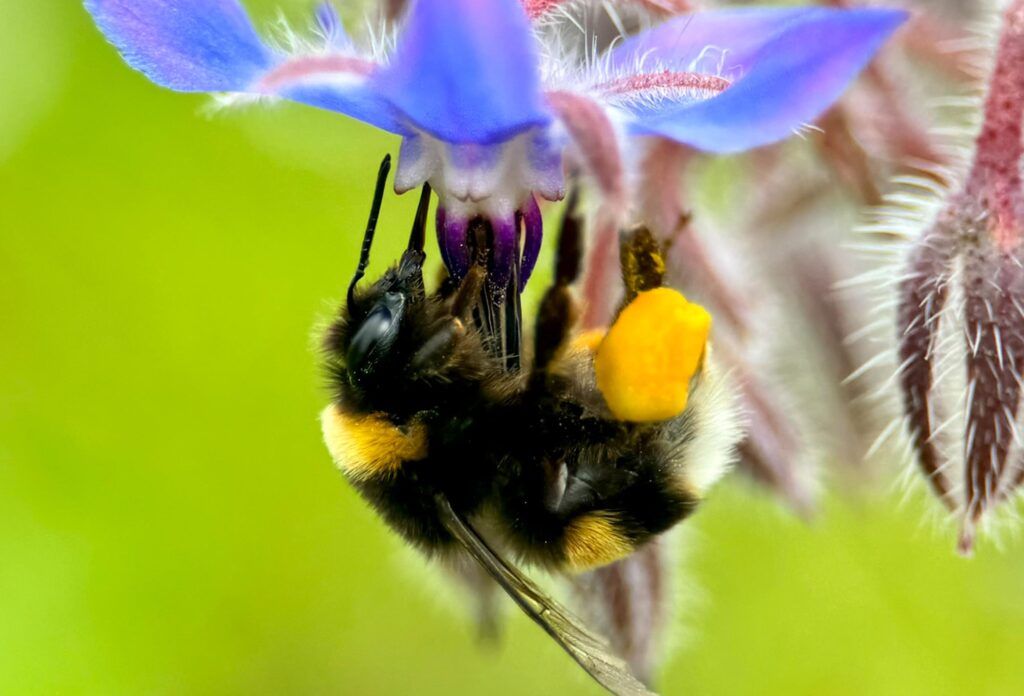
Pollination and Pollinators: New Thematic Infographic Now Available on the TERRA Website
The TERRA Associate Laboratory has just released its latest thematic infographic dedicated to pollination and pollinators. This new resource is the result of a collaboration between the FLOWer Lab (CFE, Universidade de Coimbra) and researcher Elisabete Figueiredo (LEAF, Instituto Superior de Agronomia). Available online, this scientific and educational tool clearly and visually summarizes the vital importance of pollination for environmental and food sustainability, highlighting the essential role of pollinators both in Portugal and globally.
Pollination is the process through which pollen is transferred between flowers of the same species, enabling the reproduction of flowering plants and the development of fruits and seeds. Although often invisible to the human eye, this phenomenon is crucial for ecosystem health and global agricultural production. It is estimated that around 80% of flowering plants in temperate ecosystems depend in some way on animal-mediated pollination—mainly by insects. In agriculture, about 75% of the world’s major food crops—including fruits, vegetables, nuts, coffee, chocolate, and almonds—require pollinators to ensure productivity.
In the Portuguese context, pollinator diversity is remarkable. Around 740 species of wild bees—the most efficient pollinators—are found in the country, along with over 210 species of hoverflies (Syrphidae), 140 species of diurnal butterflies, and more than 2,000 species of nocturnal moths, among many others. The group also includes beetles, wasps, true bugs, ants, and even some birds and reptiles that contribute to pollination, particularly in Mediterranean ecosystems.
However, pollinators are facing increasing threats. The global biodiversity crisis is having a significant impact on these species. In Europe, one-third of bee and butterfly species are in decline, and one in ten is at risk of extinction. In Portugal, major threats include habitat loss and fragmentation, agricultural intensification and pesticide misuse, rural landscape simplification, climate change, and the spread of invasive species.
The infographic developed by the FLOWer Lab and Elisabete Figueiredo (LEAF) goes beyond diagnosis to propose actionable solutions. Recommended measures include promoting diverse natural habitats, planting native flowering plants throughout the year, using pesticides sustainably, creating microhabitats with food and nesting areas, and encouraging public engagement in citizen science projects for pollinator monitoring. Public awareness is emphasized as essential for the conservation of these key species.
In addition to practical recommendations, the infographic highlights two major projects in the field of pollination:
- PolinizAÇÃO – a national initiative aimed at developing an Action Plan for the Conservation and Sustainability of Pollinators in Portugal.
- ARCADE – a project focused on enhancing a critical component of pollinator taxonomy and conservation: reference collections. This includes the indexing of specimens and species, taxonomic revision, and improvement of entomological collections in Portugal.
The new infographic is freely accessible and can be viewed on the official website of the TERRA Associate Laboratory. It serves as a valuable tool for researchers, educators, policymakers, and all citizens concerned about the future of ecosystems and agriculture.

Partilhe esta notícia:
Share this news: