


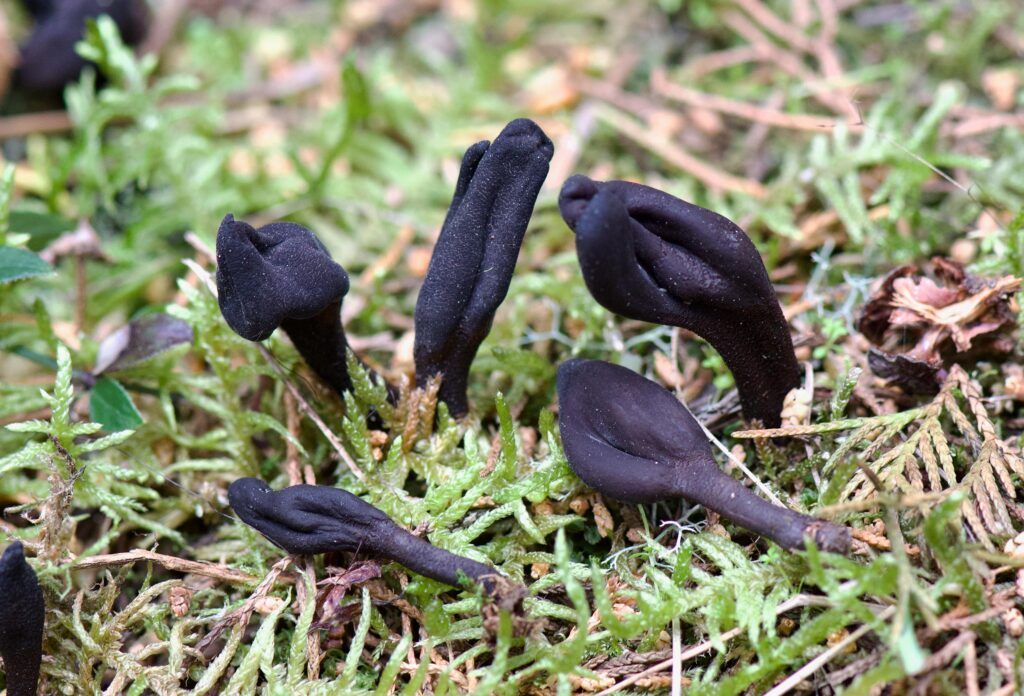
Microglossum atropurpureum © Susana Cunha
Over 1,000 Fungal Species Now on the IUCN Red List of Threatened Species, with Contribution from the University of Coimbra
The latest update of the IUCN (International Union for the Conservation of Nature) Red List of Threatened Species marks a historic milestone: more than 1,000 fungal species have now been officially assessed, confirming that deforestation, agricultural expansion, and urban development are driving many species toward extinction globally.
Currently, the IUCN Red List includes 169,420 species of animals, plants, and fungi, of which 47,187 are threatened with extinction. With the recent addition of 482 newly assessed fungal species, the total number of fungi on the Red List has risen to 1,300, with at least 411 at risk of extinction.
“Life on Earth depends on fungi, yet they have long been overlooked. Thanks to the dedication of scientists and citizen scientists over the past decade, more than 1,000 of the 150,000 known fungal species worldwide have now been assessed for the IUCN Red List. This knowledge must be harnessed to protect the unique fungal kingdom, whose underground networks sustain ecosystems across the globe,” said Dr. Grethel Aguilar, Director General of the IUCN.
The MyCoLAB of the Centre for Functional Ecology at the University of Coimbra (UC) – one of the research units of the TERRA Associate Laboratory – is part of this collective effort and has been responsible for assessing the extinction risk of more than 80 fungal species, about 60 of which were included in this update. Since 2019, MyCoLAB has been assessing fungal species for the IUCN Red List, with a particular focus on specific fungal groups and the development of tools to accelerate the inclusion of these organisms in the Red List.
“More assessments are urgently needed to identify and mitigate the extinction risks faced by fungi,” stated Susana P. Cunha, a researcher at MyCoLAB involved in comprehensive analyses of fungal extinction risk. Ongoing habitat loss and degradation, especially in Mediterranean forests, threaten rare species such as the bolete Cyanoboletus poikilochromus, now listed as ‘Vulnerable’.
MyCoLAB coordinator and TERRA researcher Susana C. Gonçalves emphasizes that fungal conservation is essential: “With an estimated 2.5 million species, of which around 155,000 have been scientifically described, fungi play critical roles in ecosystems. The loss of these organisms results in the loss of essential ecological services such as organic matter decomposition, soil fertility support, and carbon sequestration.”
In Portugal, no national-level assessments have yet been conducted specifically for fungi. However, MyCoLAB highlights the urgent need to include these organisms in national biodiversity protection legislation, such as the Inventory of Classified Natural Values. The project also demonstrates that urban and peri-urban areas still contain valuable habitats for biodiversity and underscores the importance of properly protecting and managing these natural refuges.
Partilhe esta notícia:
Share this news: