


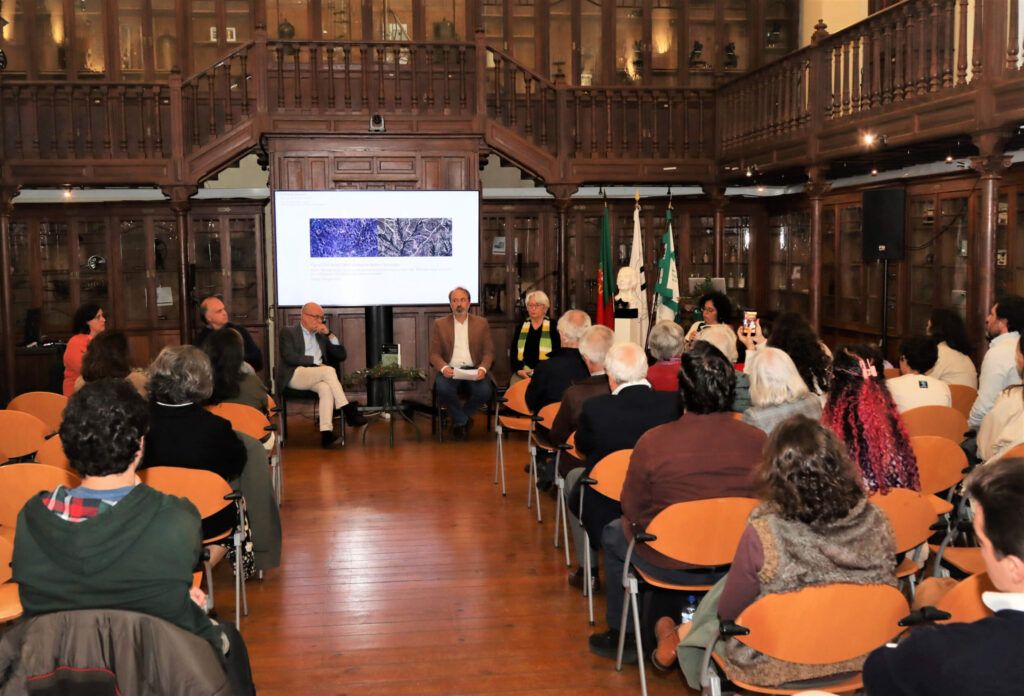
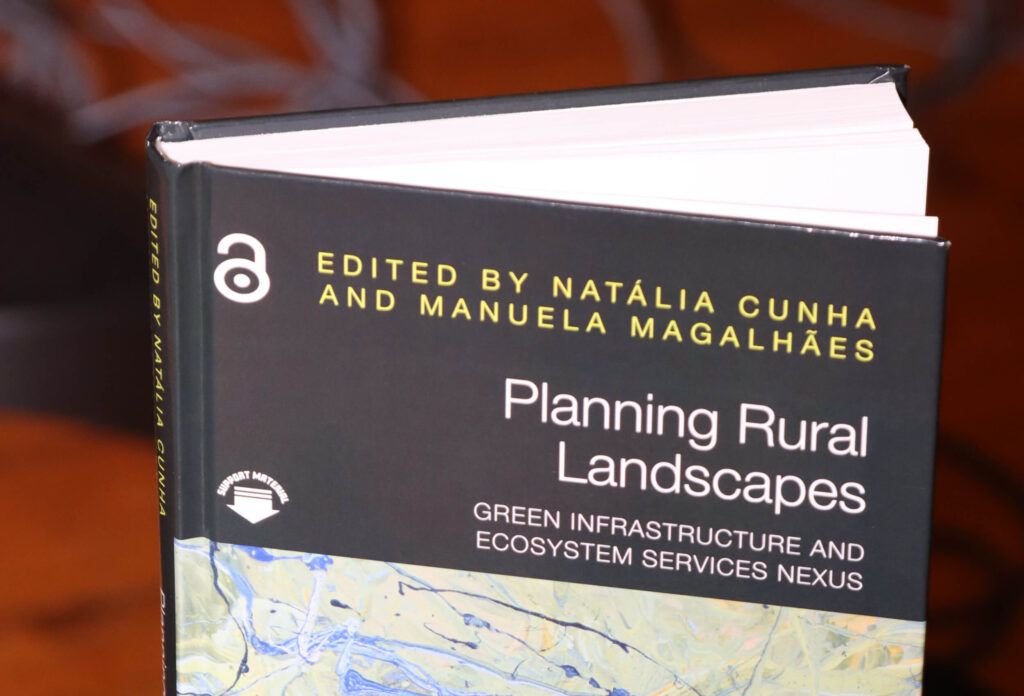
Launch of the book “Planning Rural Landscapes. Green Infrastructure and Ecosystem Services Nexus”
International work coordinated by LEAF/TERRA researchers was presented at ISA and proposes new approaches to rural landscape planning.
On November 4, the official presentation of the book “Planning Rural Landscapes. Green Infrastructure and Ecosystem Services Nexus” took place, coordinated by researchers from LEAF – Linking Landscape, Environment, Agriculture And Food and TERRA members Natália Cunha and Manuela Raposo Magalhães.
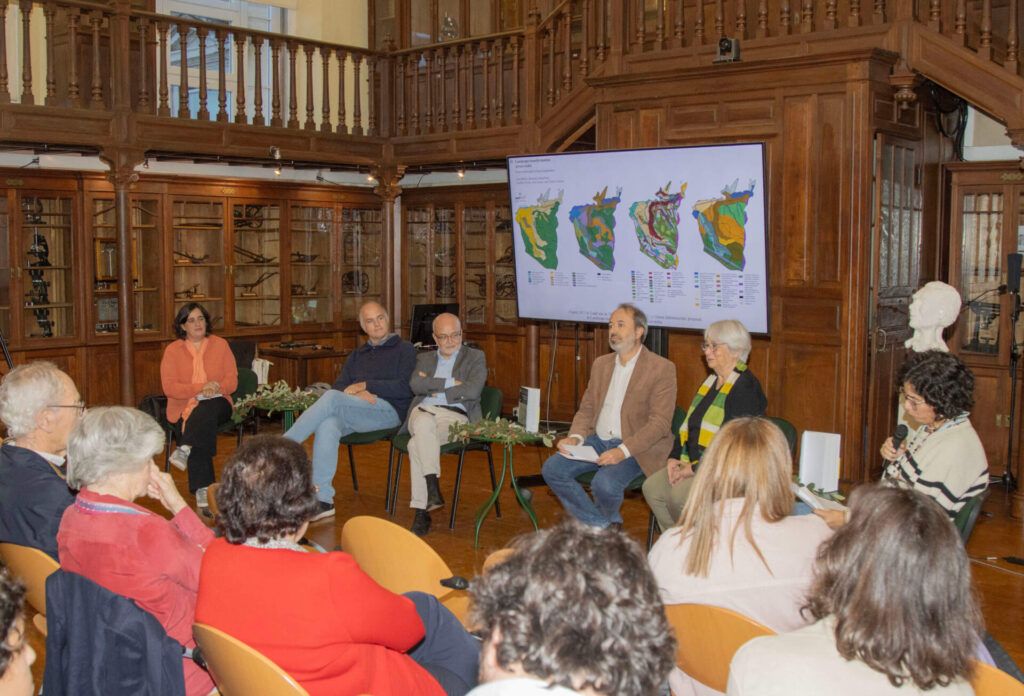
After TERRA reported on the publication of the work in August – news here – its official presentation took place in the Salão Nobre of the Instituto Superior de Agronomia (ISA), School of Agriculture. The session was presented by Professor Tiago Domingos, President of MARETEC/LARSyS (IST), with contributions from Professor António Brito, President of the Instituto Superior de Agronomia (ISA), School of Agriculture, and Professor David Fangueiro, Coordinator of LEAF. The book’s editors, Natália Cunha and Manuela Raposo Magalhães, researchers at LEAF/TERRA, also participated, as did the authors, in a debate moderated by researcher Selma Pena, coordinator of LEAF’s G1 Resource Management & Landscape Architecture group.
Published by international publisher Taylor & Francis – Routledge, this book proposes innovative approaches to rural landscape planning, with direct application to the national context. This book reflects continuity and renewal, affirming the role of Landscape Architecture and Ecological Planning as central instruments of territorial sustainability.
n modern terms, it refers to green infrastructure, ecosystem services, and nature-based solutions, aligning planning practices with the latest European strategies — the European Green Deal and the Biodiversity Strategy.
The book shows us that the landscape is an open and self-poetic system, with its own thresholds of resilience — a living organism that adapts and transforms itself. The studies presented, from Portugal to Germany, Italy, Spain, Chile, and Algeria, reveal a way of thinking that is both local and global: rooted in the territory, but in dialogue with the world.
Partilhe esta notícia:
Share this news: