


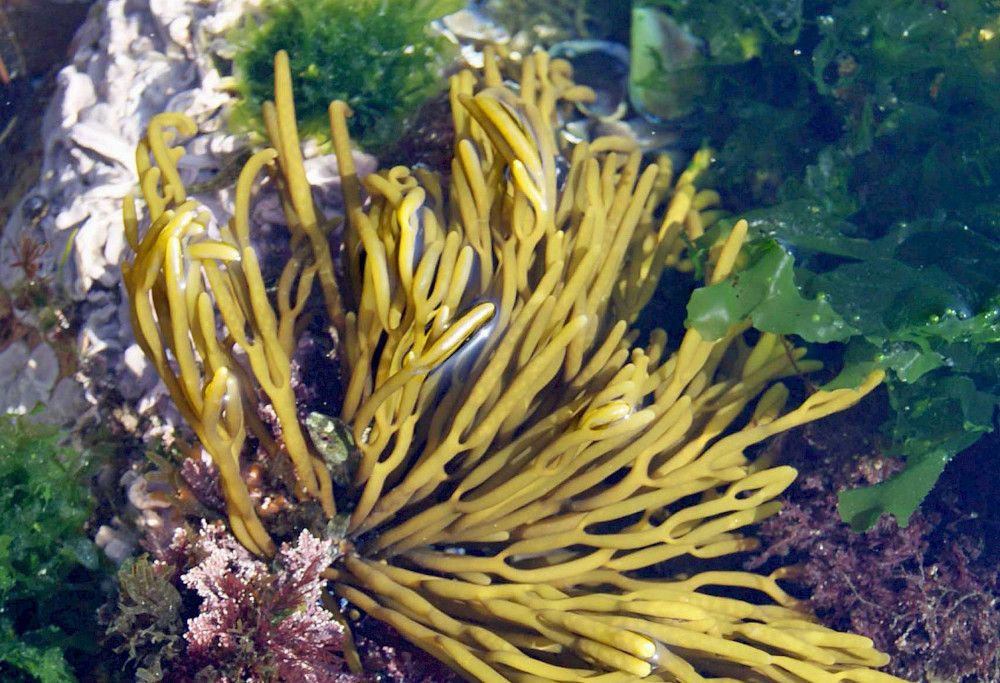
CFE/TERRA researcher develops Illustrated Guide to the Main Macroalgae of the Portuguese Continental Atlantic Coast
Illustrated Guide to the Main Macroalgae of the Portuguese Continental Atlantic Coast, compiled by Leonel Pereira (CFE and TERRA), was highlighted by the Público newspaper as an essential contribution to teaching and research in marine biology.
The Público newspaper recently highlighted the launch of the Illustrated Guide to the Main Macroalgae of the Portuguese Continental Atlantic Coast, written by Leonel Pereira, a researcher at the Center for Functional Ecology (CFE) and member of the TERRA Associate Laboratory – read the Público article here. This pioneering guide brings together and describes the main species of macroalgae found on the Portuguese coast, filling a long-felt gap in marine biology teaching and research in Portugal.
“In addition to their ecological value, [macroalgae] play an important chemical and physical role: they help regulate water quality, capture carbon dioxide, and contribute to the protection of coastal areas by reducing wave energy and stabilizing sediments. Their presence or absence is a direct indicator of the environmental health of Portuguese waters,” explains the CFE and TERRA researcher.
With contributions from Professor Ignacio Bárbara of the University of A Coruña, the guide was designed as an accessible, up-to-date, and visually appealing resource to support students and researchers in the fields of marine botany, biotechnology, and coastal ecology.
According to Leonel Pereira (CFE/TERRA), the guide was developed “to directly support the subjects I teach, but also to serve as a useful tool for other Portuguese and foreign universities.” Written in English, the guide aims to reach an international audience and strengthen the profile of Portuguese science.
In addition to highlighting the ecological, physical, and chemical role of macroalgae in marine ecosystems, the guide warns of the growing threat of invasive species and highlights the contribution of citizen science in monitoring biodiversity through platforms such as iNaturalist and BioDiversity4All. “This collaboration between scientists and civil society strengthens environmental protection and promotes greater ecological awareness among coastal communities,” it concludes.
Learn more about this release at cfe.uc.pt/noticias/especialista-da-fctuc-desenvolve-guia-ilustrado-das-principais-macroalgas-da-costa-portuguesa
The Illustrated Guide to the Main Macroalgae of the Portuguese Continental Atlantic Coast available here.
Partilhe esta notícia:
Share this news: