


LEAF/TERRA researchers publish first record of outdoor myrtle rust in Europe
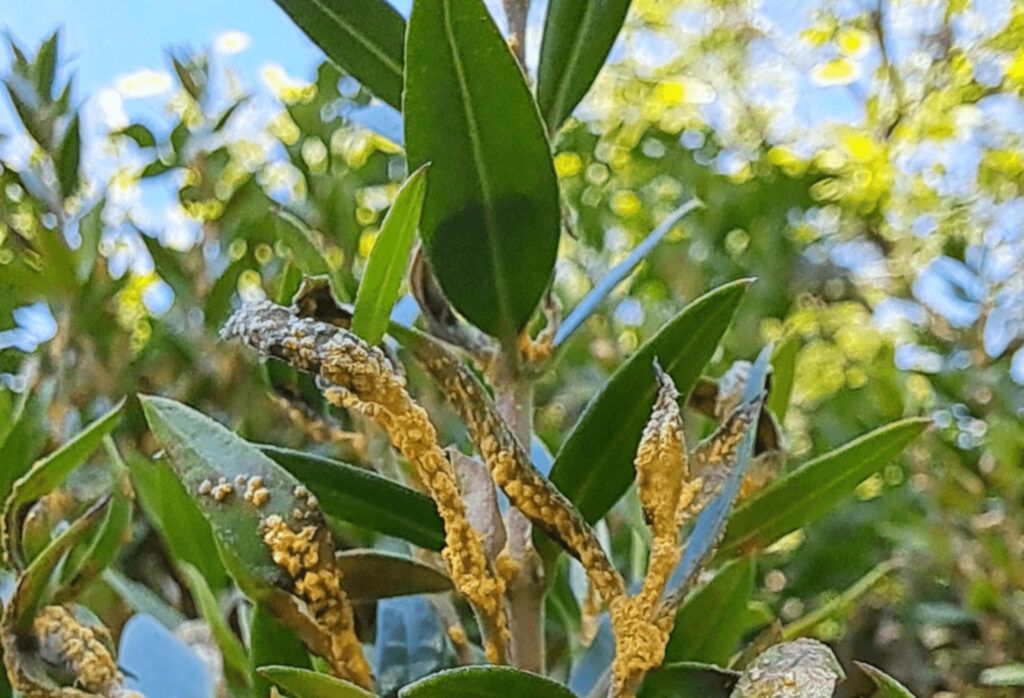
A study conducted by LEAF/TERRA researchers identified, for the first time in Europe, the presence of the fungus Austropuccinia psidii — the causal agent of myrtle rust — in Myrtaceae plants grown outdoors, raising concerns about the impact of this disease on biodiversity.
A study conducted by a multidisciplinary team of researchers from LEAF – Linking Landscape, Environment, Agriculture And Food / TERRA Associate Laboratory, LPVVA -Laboratório de Patologia Vegetal “Veríssimo de Almeida” and Centre for Applied Ecology “Prof. Baeta Neves” (CEABN) / InBIO of the Instituto Superior de Agronomia (ISA), School of Agriculture, and CE3C/CHANGE, of the University of Lisbon, reports, for the first time, the presence of the fungus Austropuccinia psidii — the causal agent of myrtle rust — in outdoor Myrtaceae plants in Europe. The detection occurred in several gardens in the city of Lisbon.
Rust poses a significant threat to biodiversity, native and ornamental species, and eucalyptus plantations. As it is a quarantine organism, early detection is essential to contain its spread and protect vulnerable ecosystems and economic activities.

Supplementary Figure S1. Myrtle rust caused by Austropuccinia psidii detected in five locations in Lisbon, Portugal (38°44’47.8″N 9°10’58.4″W; 38°42’00.9″N 9°12’07.0″W; 38°43’10.2″N 9°09’01.7″W; 38°42’22.6″N 9°12’03.3″W; 38°42’31.3″N 9°11’08.6″W). A. Heavily infected Myrtus communis hedgerow. B-D. Distortion of young shoots and leaves, with bright orange uredinia erupting on the abaxial surface of leaves, stems, and flower pedicels E. Rust symptoms and signs on Lophomyrtus × ralphii ‘Purpurea’. F-G. Artificially inoculated myrtle showing foliar rust symptoms and signs (10 days post-inoculation). H. Urediniospores (scale bar = 10 μm).
This work reinforces the importance of phytosanitary surveillance and early detection to mitigate the spread of this emerging disease and protect biodiversity and national forest resources.
Article available in the online publications of APS – The American Phytopathological Society: https://doi.org/10.1094/PDIS-07-25-1433-PDN
Partilhe esta notícia:
Share this news: