


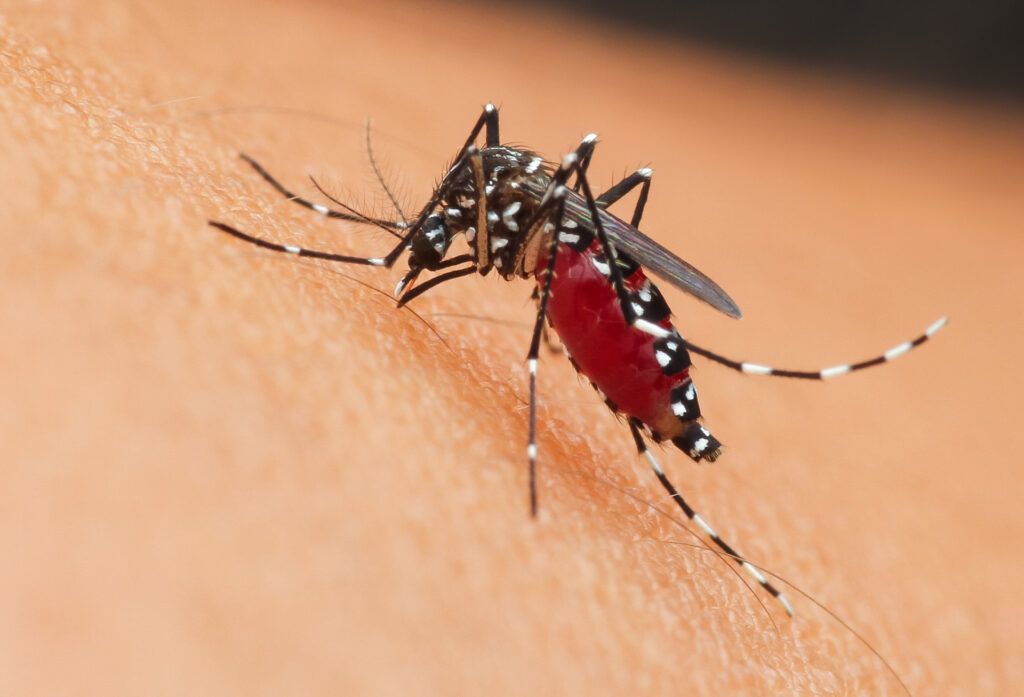
Eradicating mosquitoes: bold solution or ecological risk?
Commentary by researcher Hugo Costa Osório on the proposal to eradicate mosquitoes, as discussed in Público.
On June 7, 2025, the newspaper Público published a provocative article entitled “Será que devíamos extinguir os mosquitos? Agora já podemos.”, raising a question that, though radical, is gaining growing relevance in the context of climate change and global health crises.
In response to that article, researcher Hugo Costa Osório (ISAMB and TERRA Associate Laboratory) published a critical reflection on the TERRA website, examining the ethical, ecological, and scientific implications of using advanced technologies for vector control, specifically targeting mosquitoes.
The illusion of a simple solution
In his analysis, the researcher acknowledges that, at first glance, the idea of eradicating mosquito species — such as Aedes aegypti or Anopheles gambiae — may seem appealing, especially given estimates that these insects are responsible for over 700,000 deaths annually, linked to diseases like malaria, dengue, yellow fever, and Zika.
However, he recalls that the history of mosquito control is marked by failed solutions, such as the widespread use of DDT in the 20th century, which led to biological resistance and significant environmental harm. According to the researcher, this historical lesson should serve as a warning against the risks of poorly evaluated or hastily applied technologies.
The new frontier: biotechnology and gene drive
The text highlights the revolutionary potential — but also the real dangers — of new techniques such as the release of sterile mosquitoes, the use of Wolbachia bacteria, and, most notably, gene drive technology. Gene drive allows for the introduction and propagation of genetic changes in a population, with the aim of controlling or eliminating a species.
For Hugo Osório, gene drive represents a bold frontier in biotechnology that demands extreme caution:
“An attempt to reprogram nature to protect human health. Yet it raises serious ethical and ecological concerns. Its application can cross geographical and ecological boundaries and may be difficult to reverse once deployed, requiring a cautious approach grounded in scientific rigor, transparency, community engagement, and international governance.”
Moreover, these genetically modified organisms (GMOs) face legal obstacles, particularly within the European Union, where no clear legal framework yet exists — even for public health emergencies.
The Portuguese case: active surveillance and scientific responsibility
The commentary stresses that Portugal is not immune to this issue. The growing presence of species such as Aedes albopictus and Aedes aegypti is a concrete concern. The National Institute of Health Doutor Ricardo Jorge (INSA), through the Vector Surveillance Network (REVIVE), collaborates with the Directorate-General of Health on monitoring and prevention initiatives. Projects involving the release of sterile mosquitoes and Wolbachia technology are already underway.
For Hugo Osório, maintaining a rigorous and transparent scientific approach is essential — one that includes local community involvement, respects principles of precaution and ethics, and promotes responsible global governance in the use of these tools.
“Eradicating mosquitoes may seem like a simple response to a complex problem — but nature rarely responds in linear or predictable ways.”
A debate we cannot ignore
The commentary concludes with a call for clarity: while new biotechnological tools offer unprecedented opportunities, they demand informed choices, clear legislation, and collective awareness.
Hugo Costa Osório’s reflection is a significant contribution to the scientific, ethical, and political debate on the future of vector-borne disease control.
You can read the original commentary by the researcher here (in portuguese).
Partilhe esta notícia:
Share this news: