


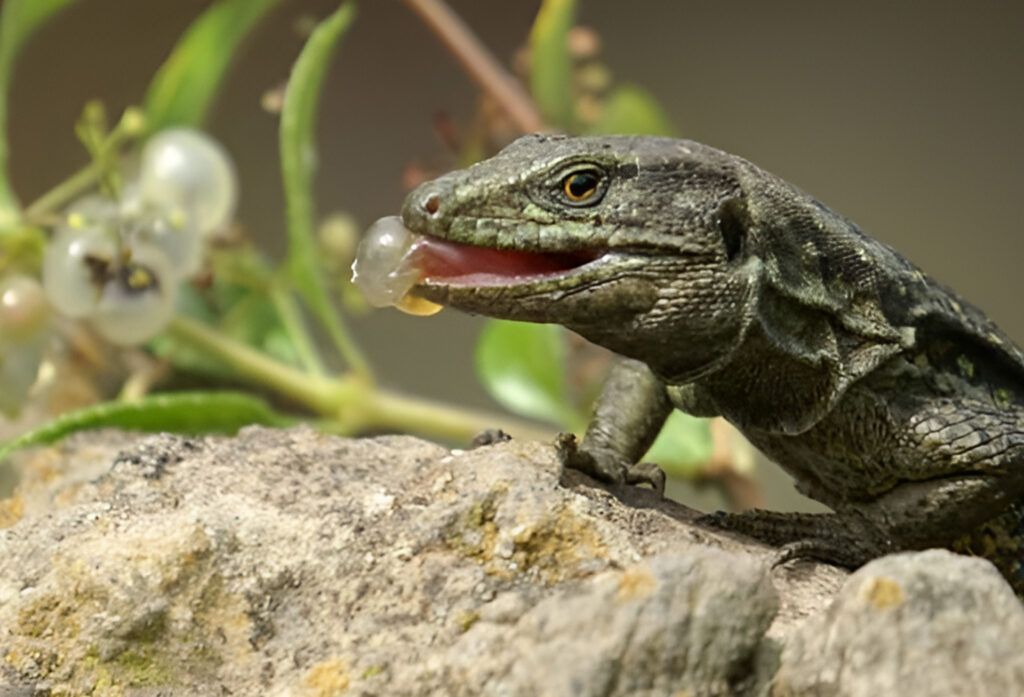
Canarian lizard (Gallotia galloti) © Beneharo Rodríguez
TERRA Associate Laboratory Releases Infographic on Ecological Networks and Ecosystem Services
The TERRA Associate Laboratory has recently released an infographic dedicated to Ecological Networks and Ecosystem Services, highlighting the importance of biodiversity for life on Earth and the impacts of its degradation. The infographic was created by researchers Ruben Heleno and Paula Castro from the Centre for Functional Ecology (CFE).
We know only a quarter of the 9 million species on Earth, and each one depends on others for survival, creating a complex web of interdependencies. However, in recent decades, the majority of wild species populations have been declining drastically, leading to biodiversity loss at a rate comparable to mass extinction events.
Currently, around 1 million species are threatened with extinction. The loss of each species affects others, compromising the balance of ecosystems and the essential services they provide to humanity, such as food, energy, raw materials, and climate regulation.
Larger species are under particular threat, and their extinction could destabilize trophic networks, leading to extinction cascades and affecting vegetation, carbon storage capacity, soil productivity, and pollination. It is estimated that pollinators, including various species of wild bees, facilitate seed production for 78% of wild plants and are essential for 35% of global agricultural production. Paradoxically, around 2.5 billion people worldwide lack regular access to adequate food, representing nearly 30% of the global population.
Another crucial service impacted by biodiversity loss is seed dispersal by animals that consume fruits. This function is vital for plants to withstand the impacts of climate change and local events such as droughts, floods, or fires. In Europe, a third of seed-dispersing animals are at risk of extinction, and 30% of fruiting plants depend on threatened dispersers, putting them at risk of losing their main allies in natural regeneration.
In Portugal, the seed dispersal service provided free of charge by wild animals is valued at over 23 million euros annually in reforestation efforts after forest fires. Still, no human intervention could fully replace this natural process.
Through this infographic, researchers Ruben Heleno and Paula Castro from CFE, in collaboration with the TERRA Associate Laboratory, aim to raise awareness of the importance of ecological networks and ecosystem services, reinforcing their commitment to promoting research and environmental sustainability. Through this work, they hope to contribute to greater awareness of the need to protect biodiversity and ensure a sustainable future for future generations.
———–
Access the Infographic by clicking here.
——
Also, watch the video on the importance of wild animals in seed dispersal by clicking here.
Partilhe esta notícia:
Share this news: