


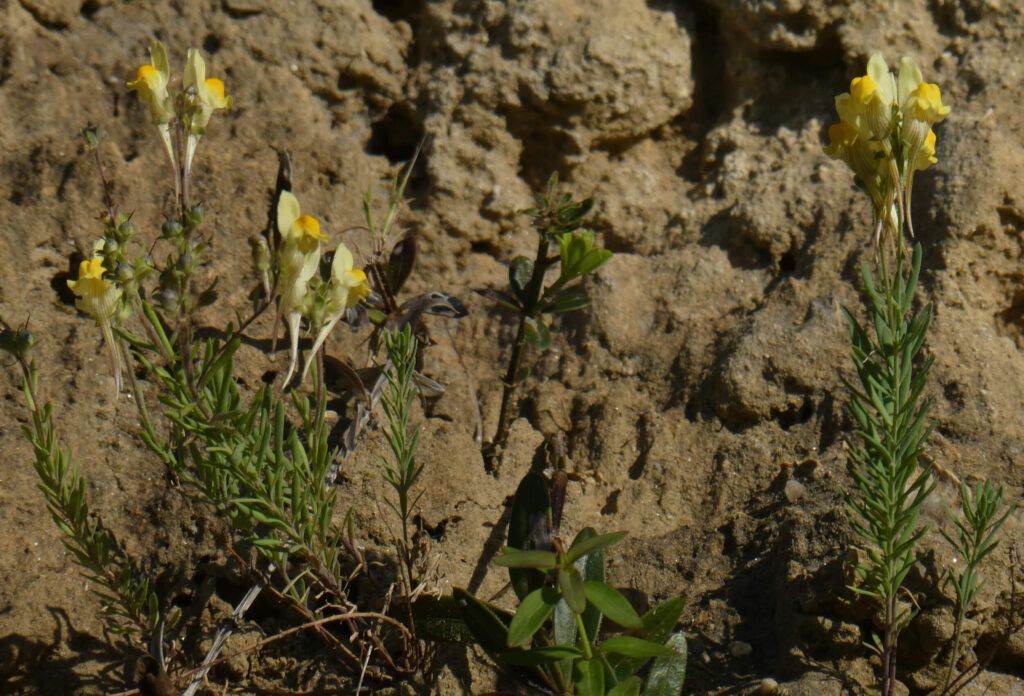
New species discovered by João Farminhão (CFE/TERRA) opposite the city of Lisbon
Linaria almadensis joins the discoveries that place Portuguese research on the global biodiversity map.
The discovery of new species does not only happen in remote tropical forests. Linaria almadensis, now described as a new species to science, is endemic to the cliffs of Gargalo do Tejo, in the municipality of Almada — right across from the city of Lisbon.
Although the first specimens were collected in 1843, it was only recently, as part of a taxonomic review, that the plant was identified as a distinct species by João Farminhão, a researcher at the Center for Functional Ecology (CFE) and the TERRA Associate Laboratory at the University of Coimbra. The material that supported the description was collected near Cristo-Rei, overlooking the Jerónimos Monastery, revealing the existence of unique biodiversity in the heart of the metropolitan area — the record for this new species is now available on Flora-On: flora-on.pt/#1linaria+almadensis.
Linaria almadensis occurs exclusively on sandy cliffs and terraces near limestone outcrops. It differs from closely related species — Linaria supina and L. polygalifolia — in the shape of its leaves, which are narrowly elliptical-oblong to elliptical-oblanceolate, and in the coloration of its corolla, with yellowish-white upper petals, an orange-yellow palate, and a spur often tinged with violet.
With only a few dozen individuals known to exist, the species faces a high risk of extinction, requiring urgent conservation measures to safeguard this unique natural heritage.
The discovery of Linaria almadensis adds to João Farminhão‘s ongoing work in identifying and promoting biodiversity. In 2024, the researcher compiled Portugal’s contributions to the description of new species globally (read the news here), highlighting the growing role of national research in documenting life on the planet. His work, developed within the scope of CFE and TERRA, has been fundamental in revealing previously unknown biological heritage.
Partilhe esta notícia:
Share this news: