


CFE study reveals effectiveness of biological control of ‘Acacia longifolia’
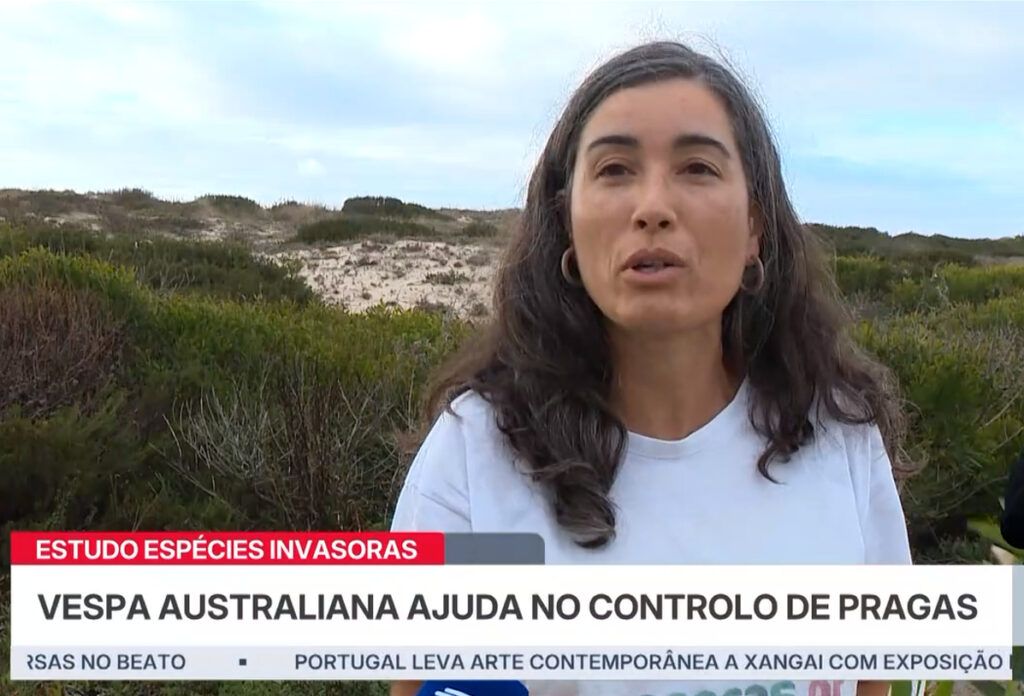
RTP1 TV report highlights CFE research showing that the Australian bud-galling wasp ‘Trichilogaster acaciaelongifoliae’ reduces seed production of the invasive plant by up to 98%, supporting the recovery of dune ecosystems.
A study by the “Plantas Invasoras em Portugal” group on the biological control of the long-leaved acacia (Acacia longifolia) was featured on the RTP1 Portugal em Rede TV program. Researchers from the Centre for Functional Ecology (CFE) and TERRA members Elizabete Marchante and Liliana Neto Duarte participated in the report to explain how the Australian bud-galling wasp Trichilogaster acaciaelongifoliae is helping to curb the spread of Acacia longifolia, one of the most problematic invasive plants on the Portuguese coast.
On RTP1, CFE/TERRA researcher and lead author of the study Liliana Neto Duarte explained that the Australian bud-galling wasp Trichilogaster acaciaelongifoliae, introduced in 2015 after several tests and risk analyses, is reducing the annual seed production of this invasive plant by up to 98% in some locations. It has thus proven to be an effective, safe, and sustainable tool to support the recovery of dune ecosystems.
See the full report at rtp.pt/play/p15669/e885935/portugal-em-rede/1375268(in Portuguese).
More information about the study at cfe.uc.pt/en/news/inseto-australiano-reduz-ate-98-a-producao-de-sementes-de-acacia-de-espigas-nas-dunas-portuguesas/.
Partilhe esta notícia:
Share this news: